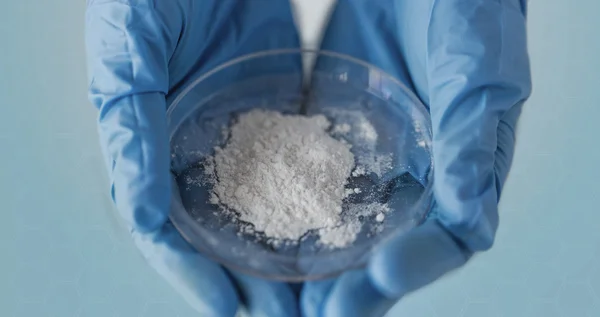
Description
⚡ Thidiazuron (TDZ) — a phenylurea cytokinin so potent that it is effective at nanomolar concentrations. Can induce shoot organogenesis in species completely refractory to other cytokinins.
| 🧪 CAS | 51707-55-2 | ⚖️ MW | 220.23 g/mol |
| 🔬 Grade | TC / Research | 🌡️ Storage | RT, dark, dry; stock −20 °C |
⚡ Power comes with responsibility
TDZ is 100–1000× more active than BAP in most bioassays. This makes it exceptional for difficult or recalcitrant species — but the same potency causes severe vitrification, shoot fasciation, and abnormal callus if the concentration is even slightly too high. Start at 0.01–0.05 mg/L and titrate up carefully.
⚠️ TDZ is extremely persistent in plant tissue — residual TDZ can inhibit rooting and cause abnormalities in Stage III. Always transfer TDZ-treated shoots to TDZ-free medium for 1–2 subculture cycles before rooting.
🌱 Working concentrations
| Use | Concentration | Notes |
|---|---|---|
| Difficult species shoot induction | 0.01–0.1 mg/L | Start at 0.01, titrate up |
| Direct organogenesis from leaf/stem | 0.1–1 mg/L | Short pulse (2–4 weeks) |
| Recalcitrant legumes | 0.01–0.05 mg/L | Cotton, soybean, peanut |
| Strawberry direct shoot regeneration | 0.01–0.05 mg/L | Higher causes fasciation |
| Banana (alternative to BAP) | 0.002–0.02 mg/L | Much lower than BAP equivalent |
🧪 Stock prep
TDZ has very low water solubility. Dissolve in DMSO (most reliable) — 1 mg in 1 mL DMSO gives a 1 mg/mL stock. Dilute DMSO stock in medium to <0.1% final DMSO concentration. Filter-sterilise. Store at −20 °C.
Reviews
There are no reviews yet.