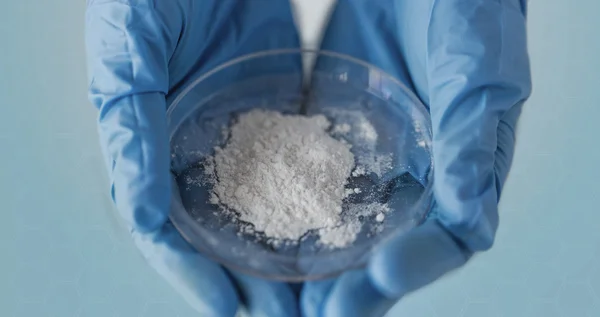
Description
🌱 Benzylaminopurine (BAP / 6-BA) — the most widely used synthetic cytokinin in plant tissue culture. If you run a TC lab, you use BAP. Full stop.
| 🧪 CAS | 1214-39-7 | ⚖️ MW | 225.25 g/mol |
| 🔬 Grade | TC / Research | 🌡️ Storage | RT, dark, dry |
⚗️ How it works
BAP activates histidine-kinase cytokinin receptors (AHK2/3/4), triggering the two-component ARR signalling cascade. The result: apical dominance breaks, axillary buds flush, cells divide. The BAP:auxin ratio in the medium is the single most important variable for whether your culture makes shoots, callus, or roots.
🧫 Working concentrations
| Use | Concentration | Notes |
|---|---|---|
| Shoot proliferation — most dicots | 0.5–5 mg/L | Higher BAP:auxin ratio → more shoots |
| Banana Musa Stage II | 3–7 mg/L | With 0.1–0.3 mg/L NAA |
| Callus induction (with 2,4-D) | 1–5 mg/L | Roughly equal to 2,4-D |
| Meristem culture | 0.1–0.5 mg/L | Lower conc → better shoot quality |
| Axillary bud proliferation | 0.2–1 mg/L | Lowest effective dose first |
| Shoot tip culture (monocots) | 2–10 mg/L | Species-dependent |
🧪 Stock solution prep
BAP is sparingly soluble in cold water. Dissolve in a few drops of 1M NaOH first, then dilute to desired volume with sterile distilled water. Prepare a 1 mg/mL stock, filter-sterilise (0.22 µm), store at 4 °C up to 6 months. ✦ Alternatively dissolve in 70% ethanol — either works.
💡 High BAP (>5 mg/L) over many subcultures can cause hyperhydricity (vitrification) and epigenetic instability. Rotate with kinetin or reduce concentration after 4–5 subculture cycles.
Reviews
There are no reviews yet.