
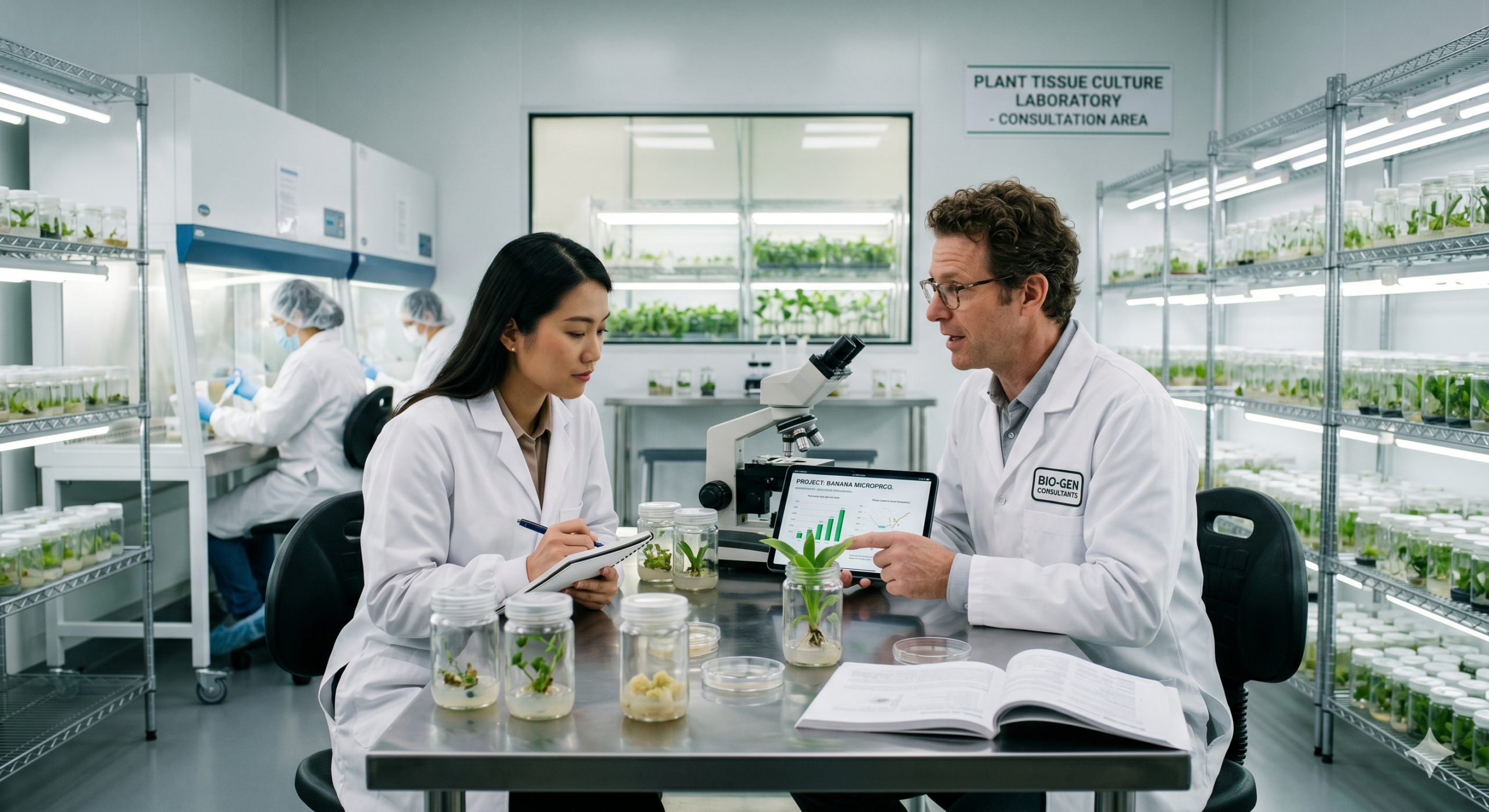
The idea that plant tissue culture requires an expensive, fully equipped laboratory puts a lot of people off. It doesn’t. A functional small-scale TC setup can be assembled in India for under ₹1.5–2 lakhs, and a minimal setup for personal or hobbyist use for considerably less. Here’s what actually matters and what you can cut.
The Non-Negotiables
Laminar Flow Hood
The single most important piece of equipment. A laminar flow cabinet pushes HEPA-filtered air horizontally across the work surface, creating a clean zone where contaminant-free work is possible. Without this (or a still-air box for minimal setups), contamination rates will be prohibitively high.
Budget option: A still-air box — a large clear plastic tote with two hand holes cut in the side — costs almost nothing and works for small-scale work where a laminar flow hood isn’t affordable yet. Contaminant rates are higher than with a proper hood but manageable with good technique.
Laminar flow hood cost in India: ₹35,000–₹80,000 for a new horizontal flow cabinet from domestic manufacturers. Second-hand units from institutional sales are worth watching for.
Autoclave or Pressure Cooker
Sterilisation is mandatory. Everything — media, water, tools, vessels — that contacts plant tissue must be sterilised. A laboratory autoclave (121°C, 15 psi) is ideal. A domestic pressure cooker at full pressure for 20–25 minutes is a functional substitute for media and small tools at the hobbyist scale.
Cost: Domestic pressure cooker: ₹2,000–₹4,000. Laboratory autoclave: ₹50,000–₹2 lakhs.
Culture Vessels
Glass jam jars with metal lids work. Polypropylene culture vessels with filtered lids are better — they allow some gas exchange without contamination. Magenta boxes, baby food jars, and purpose-made culture vessels all work. The key requirement is that they seal well and can be autoclaved.
pH Meter
Essential for media preparation. Aim for pH 5.7–5.8. A digital pH meter with a glass electrode costs ₹2,000–₹6,000. Calibrate with buffer solutions before each use. Never use pH strips for TC work — they’re not precise enough.
Analytical Balance
Needed for weighing PGRs, vitamins, and micronutrients — some of which are used at milligram quantities. A 0.001g resolution balance costs ₹8,000–₹20,000 from Indian suppliers. If using pre-mixed MS powder, you only need gram-level precision for the powder itself, agar, and sucrose — a kitchen scale works for those.
The Nice-to-Haves
- Growth chamber or rack with LED lights — 16-hour photoperiod at 2000–3000 lux, 25°C. A dedicated rack with grow lights costs ₹15,000–₹40,000. A shelf near a bright window works at the small scale.
- Magnetic stirrer with hotplate — for dissolving media components, especially agar. A domestic induction cooktop and manual stirring works as a substitute.
- Distilled or RO water supply — a domestic RO unit producing <50 ppm TDS is sufficient for most work. Laboratory-grade distilled water is better but rarely necessary for standard TC.
What You Can Skip Early On
- Sophisticated HVAC — a clean, dust-minimal room with an air purifier is sufficient for a small operation
- Expensive culture vessel brands — jars work
- Automated media dispensers — pour by hand to start
Realistic Starting Budget
| Item | Budget Option | Cost (approx.) |
|---|---|---|
| Still-air box | DIY from tote box | ₹500 |
| Pressure cooker | Domestic 5L | ₹3,000 |
| pH meter | Basic digital | ₹3,000 |
| Balance | 0.01g kitchen scale + 0.001g for PGRs | ₹8,000 |
| Culture vessels | Glass jars | ₹2,000 |
| MS medium + PGRs (starter kit) | Pre-mixed | ₹5,000 |
| Alcohol, syringes, tools | — | ₹2,000 |
| Total | ~₹23,500 |
You can initiate your first cultures with this setup. As success rates improve and you scale up, invest in a laminar flow hood — it makes the biggest single difference to contamination rates.